The Weaponization of Synthetic Identity: Bots, AI Avatars, and the Collapse of Authentic Political Communication
1Bexultanova Dinara Bakytzhankyzy
Master of International Relations
²Bolysbekova Moldir Kiyasbayevna
PhD of International Relations
L.N. Gumilyov Eurasian National University
(Astana, Kazakhstan)
Abstract. This article examines how synthetic identities - bot accounts, AI avatars, fabricated journalists and automated commentators - reshape political communication. It studies them not only as false profiles but as actors imitating social presence, professional authority and public support. A qualitative review combines academic research with documented operations: Spamouflage's AI news presenters, the Philippines-based High Five comment network and VAGue Focus personas posing as journalists. The main democratic risk is artificial participation. Citizens encounter a crowd whose size, emotions and expertise may be manufactured. This weakens deliberation, raises verification costs and makes authentic speech harder to recognize. Existing regulation improves disclosure, but still it struggles with hybrid human-AI accounts and coordinated networks.
Keywords: synthetic identity; social bots; AI avatars; computational propaganda; political communication; democratic trust; information warfare.
Political communication assumes that a speaker has an accountable relation to a message: a citizen, journalist, activist or public official can be questioned and placed in a social context. Synthetic identity breaks this link. A profile may combine a generated face, model-written biography and automated comments, while several operators maintain it as one stable person. The result is not only false content, but a false participant in the public sphere.
The topic became especially relevant in 2024-2026, as generative systems made credible text, images, voices and avatars cheaper to combine. Earlier bots already amplified low-credibility links during the first moments of diffusion [4]. New systems add a human-looking surface, respond in local language and imitate professional tone. Documented operations include virtual presenters, fabricated analysts and bulk comments that make political channels appear popular [7; 8].
The novelty of this article is to examine bots, avatars and fake journalists as forms of one phenomenon: synthetic political identity. The question is how artificial participants reshape deliberation even when a single message convinces few people. Their influence comes from manufactured social proof, emotional cueing and uncertainty about authorship. The article compares documented cases and considers why regulation detects synthetic content more easily than synthetic actors.
Social bots are not one technical category. They range from automated scripts to human-operated accounts assisted by scheduling and language tools [1]. Computational propaganda appears when such systems are joined with platform algorithms and organized political actors [2]. A synthetic identity is therefore a package of name, face, biography, speech style and network relations. It may be partly human, but still perform as an artificial member of the public.
Political authenticity is relational: people evaluate not only a claim, but also who says it and who appears to agree. Bots exploit these cues through replies, mentions and repeated frames [3; 4]. AI avatars add a visible body, while fabricated journalists borrow professional authority. Research also shows that bots can increase exposure to negative and inflammatory language [5]. Many apparently independent voices may therefore come from one operator.
1Bexultanova Dinara Bakytzhankyzy
Master of International Relations
²Bolysbekova Moldir Kiyasbayevna
PhD of International Relations
L.N. Gumilyov Eurasian National University
(Astana, Kazakhstan)
Abstract. This article examines how synthetic identities - bot accounts, AI avatars, fabricated journalists and automated commentators - reshape political communication. It studies them not only as false profiles but as actors imitating social presence, professional authority and public support. A qualitative review combines academic research with documented operations: Spamouflage's AI news presenters, the Philippines-based High Five comment network and VAGue Focus personas posing as journalists. The main democratic risk is artificial participation. Citizens encounter a crowd whose size, emotions and expertise may be manufactured. This weakens deliberation, raises verification costs and makes authentic speech harder to recognize. Existing regulation improves disclosure, but still it struggles with hybrid human-AI accounts and coordinated networks.
Keywords: synthetic identity; social bots; AI avatars; computational propaganda; political communication; democratic trust; information warfare.
Political communication assumes that a speaker has an accountable relation to a message: a citizen, journalist, activist or public official can be questioned and placed in a social context. Synthetic identity breaks this link. A profile may combine a generated face, model-written biography and automated comments, while several operators maintain it as one stable person. The result is not only false content, but a false participant in the public sphere.
The topic became especially relevant in 2024-2026, as generative systems made credible text, images, voices and avatars cheaper to combine. Earlier bots already amplified low-credibility links during the first moments of diffusion [4]. New systems add a human-looking surface, respond in local language and imitate professional tone. Documented operations include virtual presenters, fabricated analysts and bulk comments that make political channels appear popular [7; 8].
The novelty of this article is to examine bots, avatars and fake journalists as forms of one phenomenon: synthetic political identity. The question is how artificial participants reshape deliberation even when a single message convinces few people. Their influence comes from manufactured social proof, emotional cueing and uncertainty about authorship. The article compares documented cases and considers why regulation detects synthetic content more easily than synthetic actors.
Social bots are not one technical category. They range from automated scripts to human-operated accounts assisted by scheduling and language tools [1]. Computational propaganda appears when such systems are joined with platform algorithms and organized political actors [2]. A synthetic identity is therefore a package of name, face, biography, speech style and network relations. It may be partly human, but still perform as an artificial member of the public.
Political authenticity is relational: people evaluate not only a claim, but also who says it and who appears to agree. Bots exploit these cues through replies, mentions and repeated frames [3; 4]. AI avatars add a visible body, while fabricated journalists borrow professional authority. Research also shows that bots can increase exposure to negative and inflammatory language [5]. Many apparently independent voices may therefore come from one operator.
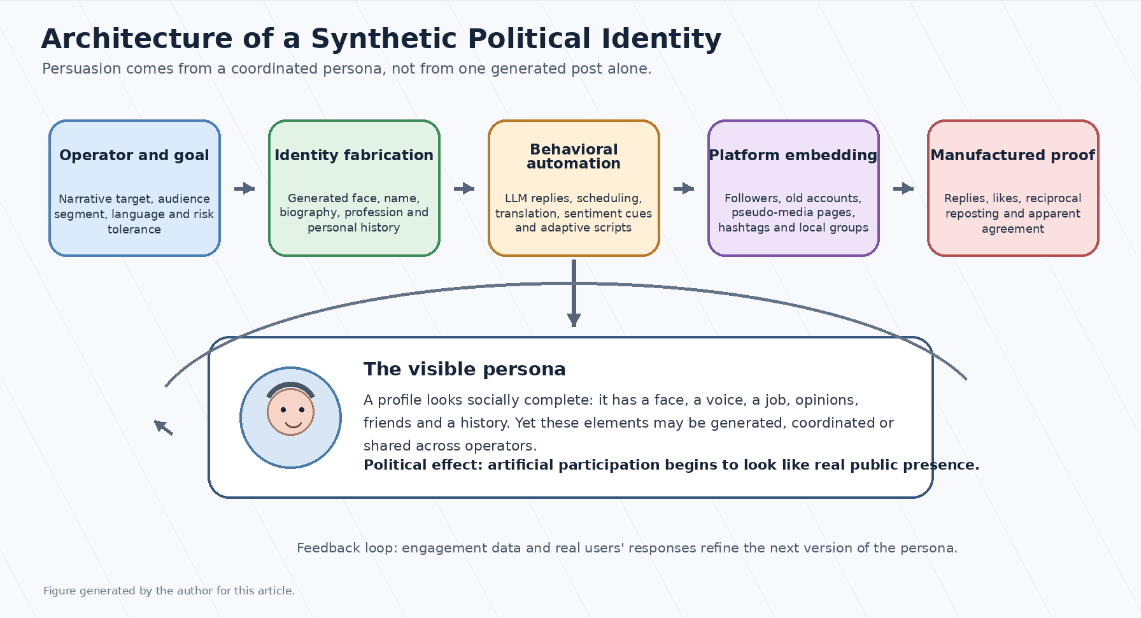
Figure 1. Architecture of a synthetic political identity
The article uses a qualitative comparison of peer-reviewed research, threat reports and legal documents published between 2016 and 2026. Three cases represent different identity functions: Spamouflage's Wolf News avatars, the Philippines-based High Five comment network, and VAGue Focus accounts posing as journalists or analysts. The comparison considers identity design, interaction style, strategic purpose, observed reach and regulatory visibility.
The study has limitations. Platform reports describe only detected activity, and bot detection may confuse automation with highly active human behavior [1]. Engagement data indicate circulation, not attitude change. Transparent AI political experiments also should not be treated as covert deception [10]. The analysis therefore focuses on misleading identity performance, while recognizing that the boundary between assistance and impersonation is not always clear.
Across the cases, synthetic identities give narratives a speaker, manufacture interaction, multiply one operator into many participants and adapt to audience reactions. A generated article may disappear alone, but biographies, comments and reposts make it resemble public debate. Early amplification matters especially for low-credibility material [4].
The article uses a qualitative comparison of peer-reviewed research, threat reports and legal documents published between 2016 and 2026. Three cases represent different identity functions: Spamouflage's Wolf News avatars, the Philippines-based High Five comment network, and VAGue Focus accounts posing as journalists or analysts. The comparison considers identity design, interaction style, strategic purpose, observed reach and regulatory visibility.
The study has limitations. Platform reports describe only detected activity, and bot detection may confuse automation with highly active human behavior [1]. Engagement data indicate circulation, not attitude change. Transparent AI political experiments also should not be treated as covert deception [10]. The analysis therefore focuses on misleading identity performance, while recognizing that the boundary between assistance and impersonation is not always clear.
Across the cases, synthetic identities give narratives a speaker, manufacture interaction, multiply one operator into many participants and adapt to audience reactions. A generated article may disappear alone, but biographies, comments and reposts make it resemble public debate. Early amplification matters especially for low-credibility material [4].
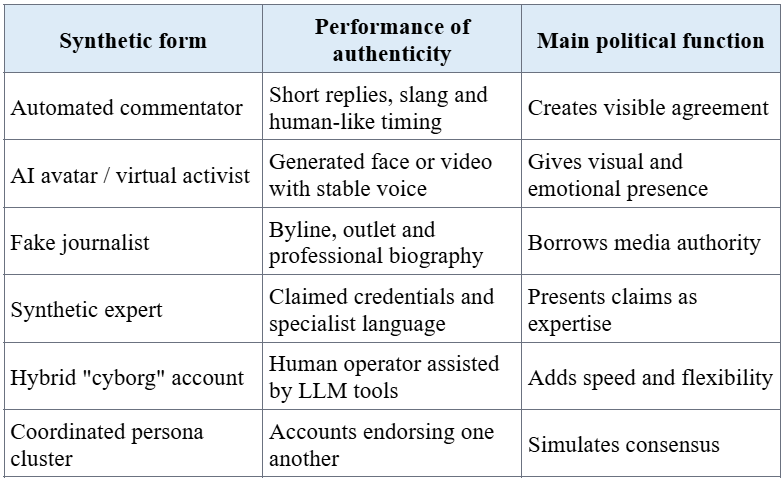
Table 1. Typology and political functions of synthetic identities
Spamouflage's Wolf News videos provide a clear example of AI avatars used as political presenters. Graphika identified fictitious presenters created with a commercial video service and distributed through fake persona accounts. The videos discussed issues favorable to pro-Chinese narratives. Their main advantage was speed and low production cost, not exceptional quality; the scripts contained errors and the surrounding accounts still showed behavioral signs of coordination [7].
The borrowed form of television news mattered. A calm face looking into the camera gives the message a body, even when no journalist exists. Yet visual realism did not produce influence by itself. An isolated AI presenter remains a novelty; surrounded by accounts that praise and repost it, the same avatar can begin to look like a media actor.
High Five demonstrates the automated-commentator function. OpenAI reported that a Philippines-based commercial network used ChatGPT to analyze political posts, suggest reply themes and produce many short comments. Accounts placed them under TikTok videos and Facebook news reports, while five channels promoted President Ferdinand Marcos Jr. Some replies appeared designed to make those channels look more popular [8].
The operation manipulated the perceived audience as much as the message. Comments created a social temperature of approval, anger or ridicule before users assessed the original post. Most received little authentic engagement [8]. Even so, cheap automation can be repeated, tested and sold as a political service.
VAGue Focus used a more professional identity. It generated biographies and posts for accounts posing as journalists or geopolitical analysts connected to invented organizations such as Focus Lens News. Some personas contacted real researchers, so the accounts supported both broadcasting and social engineering [8]. A fake journalist could publish a narrative, request an interview and collect information through the same artificial biography.
These cases fit hybrid information warfare because covert coordination, platform manipulation and political messaging are combined. NATO describes hybrid warfare as a mix of overt and covert, military and non-military means that blur the line between war and peace [9]. Synthetic personas suit this grey zone: they are easy to replace and localize, while attribution remains slow.
Spamouflage's Wolf News videos provide a clear example of AI avatars used as political presenters. Graphika identified fictitious presenters created with a commercial video service and distributed through fake persona accounts. The videos discussed issues favorable to pro-Chinese narratives. Their main advantage was speed and low production cost, not exceptional quality; the scripts contained errors and the surrounding accounts still showed behavioral signs of coordination [7].
The borrowed form of television news mattered. A calm face looking into the camera gives the message a body, even when no journalist exists. Yet visual realism did not produce influence by itself. An isolated AI presenter remains a novelty; surrounded by accounts that praise and repost it, the same avatar can begin to look like a media actor.
High Five demonstrates the automated-commentator function. OpenAI reported that a Philippines-based commercial network used ChatGPT to analyze political posts, suggest reply themes and produce many short comments. Accounts placed them under TikTok videos and Facebook news reports, while five channels promoted President Ferdinand Marcos Jr. Some replies appeared designed to make those channels look more popular [8].
The operation manipulated the perceived audience as much as the message. Comments created a social temperature of approval, anger or ridicule before users assessed the original post. Most received little authentic engagement [8]. Even so, cheap automation can be repeated, tested and sold as a political service.
VAGue Focus used a more professional identity. It generated biographies and posts for accounts posing as journalists or geopolitical analysts connected to invented organizations such as Focus Lens News. Some personas contacted real researchers, so the accounts supported both broadcasting and social engineering [8]. A fake journalist could publish a narrative, request an interview and collect information through the same artificial biography.
These cases fit hybrid information warfare because covert coordination, platform manipulation and political messaging are combined. NATO describes hybrid warfare as a mix of overt and covert, military and non-military means that blur the line between war and peace [9]. Synthetic personas suit this grey zone: they are easy to replace and localize, while attribution remains slow.
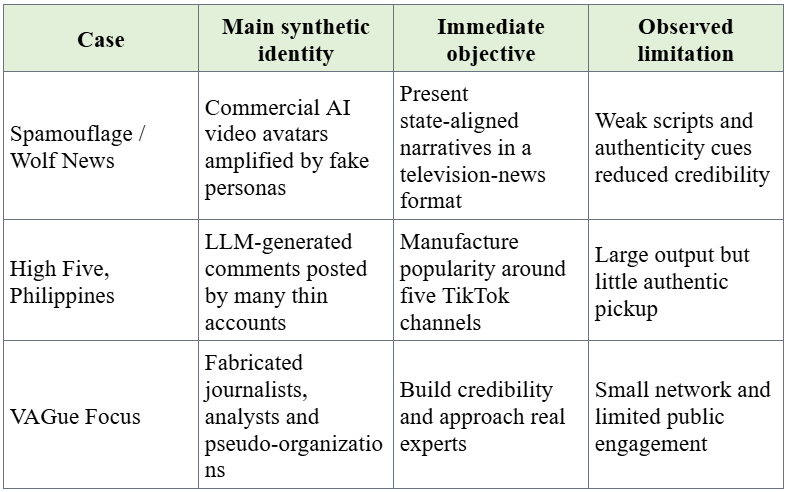
Table 2. Comparative patterns in documented synthetic identity operations
The democratic harm concerns representation. Deliberation assumes that visible participation corresponds, at least imperfectly, to real citizens and organizations. Synthetic networks inflate some positions and make others appear marginal. They may also influence what journalists see as newsworthy, because a coordinated wave resembles spontaneous interest. Once real users answer artificial accounts, genuine and manufactured behavior become difficult to separate.
Emotion accelerates this process. Bots do not need a detailed argument when anger, fear or humiliation secure attention. During the Catalan referendum debate, they targeted influential users and increased exposure to negative content [5]. Repetition can create familiarity and apparent consensus. A systematic review also found mostly harmful associations between digital media use and institutional trust [6]. Synthetic identities add a further doubt: users no longer know who is actually present.
The democratic harm concerns representation. Deliberation assumes that visible participation corresponds, at least imperfectly, to real citizens and organizations. Synthetic networks inflate some positions and make others appear marginal. They may also influence what journalists see as newsworthy, because a coordinated wave resembles spontaneous interest. Once real users answer artificial accounts, genuine and manufactured behavior become difficult to separate.
Emotion accelerates this process. Bots do not need a detailed argument when anger, fear or humiliation secure attention. During the Catalan referendum debate, they targeted influential users and increased exposure to negative content [5]. Repetition can create familiarity and apparent consensus. A systematic review also found mostly harmful associations between digital media use and institutional trust [6]. Synthetic identities add a further doubt: users no longer know who is actually present.
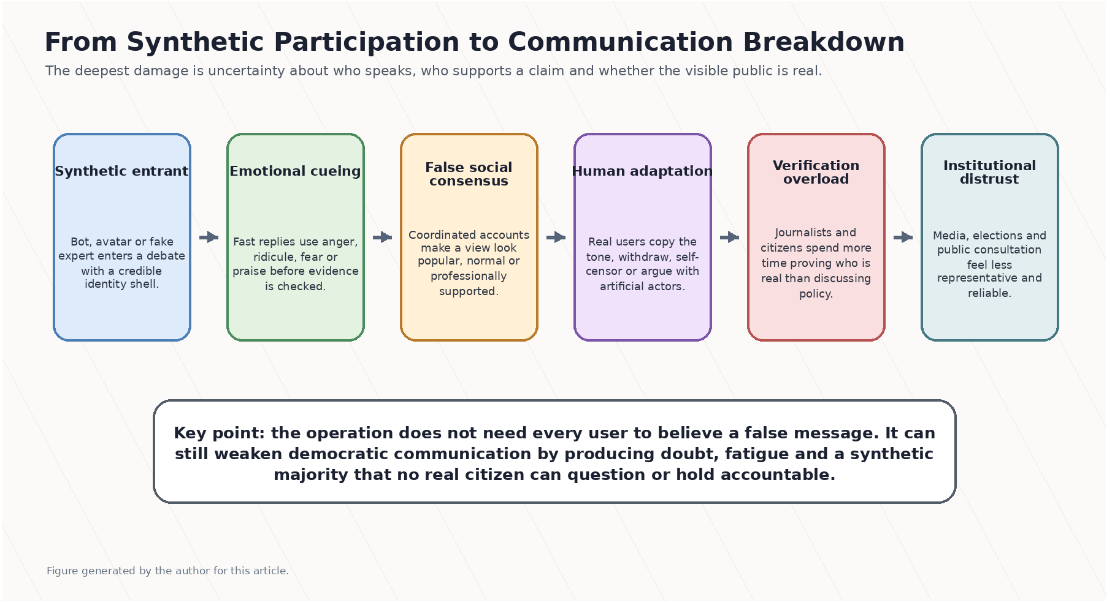
Figure 2. Pathway from synthetic participation to institutional distrust
Regulation is developing, but its object remains fragmented. Article 50 of the EU AI Act introduces transparency duties for some AI-generated or manipulated content [11]. The EU political advertising regulation, applicable since October 2025, requires labels and sponsor information [12]. Yet ordinary comments, unpaid outreach and hybrid human-AI accounts may fall outside clear disclosure. Responses should combine network detection, provenance signals, political-content archives and researcher access, while protecting lawful pseudonymity.
Synthetic identity separates political voice from accountable personhood. An avatar supplies a face, automated commenters manufacture a crowd, and a fake journalist provides authority and access. The reviewed operations often gained limited authentic engagement, but this does not remove the harm. Cheap, repeatable personas raise noise and verification costs. They also make citizens uncertain whether public support, expertise and even conflict are socially real.
Democratic resilience therefore cannot rely only on checking individual claims. Platforms should examine who speaks, how accounts coordinate and whether visible support is authentic. They should label detected synthetic media, preserve evidence of removed networks and share cross-platform indicators. Newsrooms need procedures for verifying unfamiliar experts before contact. At the same time, regulation must protect lawful pseudonymity. The aim is not universal identification, but preventing organized actors from manufacturing a public.
REFERENCES
1. Gorwa R., Guilbeault D. Unpacking the Social Media Bot: A Typology to Guide Research and Policy. Policy & Internet. 2020; 12(2): 225-248. DOI: 10.1002/poi3.184.
2. Woolley S.C., Howard P.N. Computational Propaganda: Political Parties, Politicians, and Political Manipulation on Social Media. Oxford: Oxford University Press, 2018.
3. Ferrara E., Varol O., Davis C., Menczer F., Flammini A. The Rise of Social Bots. Communications of the ACM. 2016; 59(7): 96-104. DOI: 10.1145/2818717.
4. Shao C., Ciampaglia G.L., Varol O., Yang K.C., Flammini A., Menczer F. The Spread of Low-Credibility Content by Social Bots. Nature Communications. 2018; 9: 4787. DOI: 10.1038/s41467-018-06930-7.
5. Stella M., Ferrara E., De Domenico M. Bots Increase Exposure to Negative and Inflammatory Content in Online Social Systems. PNAS. 2018; 115(49): 12435-12440. DOI: 10.1073/pnas.1803470115.
6. Lorenz-Spreen P., Oswald L., Lewandowsky S., Hertwig R. Digital Media and Democracy: A Systematic Review. Nature Human Behaviour. 2023; 7(1): 74-101. DOI: 10.1038/s41562-022-01460-1.
7. Graphika. Deepfake It Till You Make It: Pro-Chinese Actors Promote AI-Generated Fictitious People. 2023. Available at: https://public-assets.graphika.com/reports/graphika-report-deepfake-it-till-you-make-it.pdf.
8. OpenAI. Disrupting Malicious Uses of AI: June 2025. Threat Intelligence Report. 2025. Available at: https://cdn.openai.com/threat-intelligence-reports/5f73af09-a3a3-4a55-992e-069237681620/disrupting-malicious-uses-of-ai-june-2025.pdf.
9. NATO. NATO's Approach to Counter Information Threats. Updated 3 February 2025. Available at: https://www.nato.int/en/what-we-do/wider-activities/natos-approach-to-counter-information-threats
10. Malý M., Sandri G., Barberà O. Synthetic Political Actors: Emerging AI-Driven Candidates and Parties. Open Research Europe. 2026; 6: 138. Available at: https://open-research-europe.ec.europa.eu/articles/6-138
11. European Union. Regulation (EU) 2024/1689 (Artificial Intelligence Act). Official Journal of the EU, 12 July 2024. Available at: https://eur-lex.europa.eu/eli/reg/2024/1689/oj/eng
12. European Union. Regulation (EU) 2024/900 on Political Advertising. Official Journal of the EU, 20 March 2024. Available at: https://eur-lex.europa.eu/eli/reg/2024/900/oj/eng
Синтетикалық бірегейлікті қару ретінде пайдалану: боттар, жасанды интеллект аватарлары және шынайы саяси коммуникацияның күйреуі
1Бексултанова Динара Бакытжановна
Халықаралық қатынастар магистрі
²Болысбекова Молдир Киясбаевна
Халықаралық қатынастар PhD докторы
Л.Н.Гумилев атындағы Еуразия ұлттық университеті
(Астана, Қазақстан)
Аңдатпа. Бұл мақала синтетикалық бірегейліктердің – бот-аккаунттардың, жасанды интеллект негізіндегі аватарлардың, ойдан шығарылған журналистер мен автоматтандырылған пікір білдірушілердің – саяси коммуникацияны қалай өзгертетінін қарастырады. Зерттеуде олар тек жалған профильдер ретінде ғана емес, әлеуметтік қатысуды, кәсіби беделді және қоғамдық қолдауды имитациялайтын акторлар ретінде талданады.
Сапалық шолу академиялық зерттеулерді құжатталған ақпараттық операциялармен ұштастырады. Олардың қатарында Spamouflage желісінің жасанды интеллект негізіндегі жаңалық жүргізушілері, Филиппинде әрекет еткен High Five пікірлер желісі және өздерін журналист ретінде таныстырған VAGue Focus жалған тұлғалары қарастырылады.
Демократиялық жүйе үшін негізгі қауіп – жасанды қатысу феномені. Азаматтар саны, эмоциялық реакциялары мен сарапшылық деңгейі қолдан жасалуы мүмкін аудиториямен бетпе-бет келеді. Бұл қоғамдық пікірталастың сапасын төмендетіп, ақпараттың шынайылығын тексеруге кететін шығындарды арттырады және шынайы пікірді жасанды контенттен ажыратуды қиындатады.
Қолданыстағы реттеу тетіктері ақпараттың ашықтығы мен оның шығу тегін көрсету талаптарын жетілдіріп отырғанымен, адам мен жасанды интеллект әрекеті аралас гибридті аккаунттарды және үйлестірілген желілерді реттеуде әлі де қиындықтарға тап болып отыр.
Түйін сөздер: синтетикалық бірегейлік; әлеуметтік боттар; жасанды интеллект аватарлары; есептеуіш насихат; саяси коммуникация; демократиялық сенім; ақпараттық соғыс.
Использование синтетической идентичности как оружия: боты, аватары на основе искусственного интеллекта и крах аутентичной политической коммуникации
1Бексултанова Динара Бакытжановна
Магистр международных отношений
²Болысбекова Молдир Киясбаевна
PhD доктор международных отношений
Евразийский национальный университет имени Л.Н. Гумилева
(Астана, Казахстан)
Аннотация. В статье рассматривается, каким образом синтетические идентичности – бот-аккаунты, аватары на основе искусственного интеллекта, вымышленные журналисты и автоматизированные комментаторы – трансформируют политическую коммуникацию. В исследовании они анализируются не только как фальшивые профили, но и как акторы, имитирующие социальное присутствие, профессиональный авторитет и общественную поддержку.
Качественный обзор объединяет результаты академических исследований с анализом документально зафиксированных информационных операций. В их числе рассматриваются ведущие новостей на основе искусственного интеллекта, использовавшиеся сетью Spamouflage, действовавшая на Филиппинах сеть комментаторов High Five, а также вымышленные персоны VAGue Focus, выдававшие себя за журналистов.
Основной угрозой для демократической системы является феномен искусственного участия. Граждане сталкиваются с аудиторией, численность, эмоциональные реакции и экспертность которой могут быть искусственно сконструированы. Это снижает качество общественной дискуссии, увеличивает затраты на проверку достоверности информации и затрудняет разграничение аутентичных высказываний и искусственно созданного контента.
Существующие механизмы регулирования совершенствуют требования к прозрачности информации и раскрытию ее происхождения, однако по-прежнему сталкиваются с трудностями в регулировании гибридных аккаунтов, сочетающих деятельность человека и искусственного интеллекта, а также скоординированных сетей.
Regulation is developing, but its object remains fragmented. Article 50 of the EU AI Act introduces transparency duties for some AI-generated or manipulated content [11]. The EU political advertising regulation, applicable since October 2025, requires labels and sponsor information [12]. Yet ordinary comments, unpaid outreach and hybrid human-AI accounts may fall outside clear disclosure. Responses should combine network detection, provenance signals, political-content archives and researcher access, while protecting lawful pseudonymity.
Synthetic identity separates political voice from accountable personhood. An avatar supplies a face, automated commenters manufacture a crowd, and a fake journalist provides authority and access. The reviewed operations often gained limited authentic engagement, but this does not remove the harm. Cheap, repeatable personas raise noise and verification costs. They also make citizens uncertain whether public support, expertise and even conflict are socially real.
Democratic resilience therefore cannot rely only on checking individual claims. Platforms should examine who speaks, how accounts coordinate and whether visible support is authentic. They should label detected synthetic media, preserve evidence of removed networks and share cross-platform indicators. Newsrooms need procedures for verifying unfamiliar experts before contact. At the same time, regulation must protect lawful pseudonymity. The aim is not universal identification, but preventing organized actors from manufacturing a public.
REFERENCES
1. Gorwa R., Guilbeault D. Unpacking the Social Media Bot: A Typology to Guide Research and Policy. Policy & Internet. 2020; 12(2): 225-248. DOI: 10.1002/poi3.184.
2. Woolley S.C., Howard P.N. Computational Propaganda: Political Parties, Politicians, and Political Manipulation on Social Media. Oxford: Oxford University Press, 2018.
3. Ferrara E., Varol O., Davis C., Menczer F., Flammini A. The Rise of Social Bots. Communications of the ACM. 2016; 59(7): 96-104. DOI: 10.1145/2818717.
4. Shao C., Ciampaglia G.L., Varol O., Yang K.C., Flammini A., Menczer F. The Spread of Low-Credibility Content by Social Bots. Nature Communications. 2018; 9: 4787. DOI: 10.1038/s41467-018-06930-7.
5. Stella M., Ferrara E., De Domenico M. Bots Increase Exposure to Negative and Inflammatory Content in Online Social Systems. PNAS. 2018; 115(49): 12435-12440. DOI: 10.1073/pnas.1803470115.
6. Lorenz-Spreen P., Oswald L., Lewandowsky S., Hertwig R. Digital Media and Democracy: A Systematic Review. Nature Human Behaviour. 2023; 7(1): 74-101. DOI: 10.1038/s41562-022-01460-1.
7. Graphika. Deepfake It Till You Make It: Pro-Chinese Actors Promote AI-Generated Fictitious People. 2023. Available at: https://public-assets.graphika.com/reports/graphika-report-deepfake-it-till-you-make-it.pdf.
8. OpenAI. Disrupting Malicious Uses of AI: June 2025. Threat Intelligence Report. 2025. Available at: https://cdn.openai.com/threat-intelligence-reports/5f73af09-a3a3-4a55-992e-069237681620/disrupting-malicious-uses-of-ai-june-2025.pdf.
9. NATO. NATO's Approach to Counter Information Threats. Updated 3 February 2025. Available at: https://www.nato.int/en/what-we-do/wider-activities/natos-approach-to-counter-information-threats
10. Malý M., Sandri G., Barberà O. Synthetic Political Actors: Emerging AI-Driven Candidates and Parties. Open Research Europe. 2026; 6: 138. Available at: https://open-research-europe.ec.europa.eu/articles/6-138
11. European Union. Regulation (EU) 2024/1689 (Artificial Intelligence Act). Official Journal of the EU, 12 July 2024. Available at: https://eur-lex.europa.eu/eli/reg/2024/1689/oj/eng
12. European Union. Regulation (EU) 2024/900 on Political Advertising. Official Journal of the EU, 20 March 2024. Available at: https://eur-lex.europa.eu/eli/reg/2024/900/oj/eng
Синтетикалық бірегейлікті қару ретінде пайдалану: боттар, жасанды интеллект аватарлары және шынайы саяси коммуникацияның күйреуі
1Бексултанова Динара Бакытжановна
Халықаралық қатынастар магистрі
²Болысбекова Молдир Киясбаевна
Халықаралық қатынастар PhD докторы
Л.Н.Гумилев атындағы Еуразия ұлттық университеті
(Астана, Қазақстан)
Аңдатпа. Бұл мақала синтетикалық бірегейліктердің – бот-аккаунттардың, жасанды интеллект негізіндегі аватарлардың, ойдан шығарылған журналистер мен автоматтандырылған пікір білдірушілердің – саяси коммуникацияны қалай өзгертетінін қарастырады. Зерттеуде олар тек жалған профильдер ретінде ғана емес, әлеуметтік қатысуды, кәсіби беделді және қоғамдық қолдауды имитациялайтын акторлар ретінде талданады.
Сапалық шолу академиялық зерттеулерді құжатталған ақпараттық операциялармен ұштастырады. Олардың қатарында Spamouflage желісінің жасанды интеллект негізіндегі жаңалық жүргізушілері, Филиппинде әрекет еткен High Five пікірлер желісі және өздерін журналист ретінде таныстырған VAGue Focus жалған тұлғалары қарастырылады.
Демократиялық жүйе үшін негізгі қауіп – жасанды қатысу феномені. Азаматтар саны, эмоциялық реакциялары мен сарапшылық деңгейі қолдан жасалуы мүмкін аудиториямен бетпе-бет келеді. Бұл қоғамдық пікірталастың сапасын төмендетіп, ақпараттың шынайылығын тексеруге кететін шығындарды арттырады және шынайы пікірді жасанды контенттен ажыратуды қиындатады.
Қолданыстағы реттеу тетіктері ақпараттың ашықтығы мен оның шығу тегін көрсету талаптарын жетілдіріп отырғанымен, адам мен жасанды интеллект әрекеті аралас гибридті аккаунттарды және үйлестірілген желілерді реттеуде әлі де қиындықтарға тап болып отыр.
Түйін сөздер: синтетикалық бірегейлік; әлеуметтік боттар; жасанды интеллект аватарлары; есептеуіш насихат; саяси коммуникация; демократиялық сенім; ақпараттық соғыс.
Использование синтетической идентичности как оружия: боты, аватары на основе искусственного интеллекта и крах аутентичной политической коммуникации
1Бексултанова Динара Бакытжановна
Магистр международных отношений
²Болысбекова Молдир Киясбаевна
PhD доктор международных отношений
Евразийский национальный университет имени Л.Н. Гумилева
(Астана, Казахстан)
Аннотация. В статье рассматривается, каким образом синтетические идентичности – бот-аккаунты, аватары на основе искусственного интеллекта, вымышленные журналисты и автоматизированные комментаторы – трансформируют политическую коммуникацию. В исследовании они анализируются не только как фальшивые профили, но и как акторы, имитирующие социальное присутствие, профессиональный авторитет и общественную поддержку.
Качественный обзор объединяет результаты академических исследований с анализом документально зафиксированных информационных операций. В их числе рассматриваются ведущие новостей на основе искусственного интеллекта, использовавшиеся сетью Spamouflage, действовавшая на Филиппинах сеть комментаторов High Five, а также вымышленные персоны VAGue Focus, выдававшие себя за журналистов.
Основной угрозой для демократической системы является феномен искусственного участия. Граждане сталкиваются с аудиторией, численность, эмоциональные реакции и экспертность которой могут быть искусственно сконструированы. Это снижает качество общественной дискуссии, увеличивает затраты на проверку достоверности информации и затрудняет разграничение аутентичных высказываний и искусственно созданного контента.
Существующие механизмы регулирования совершенствуют требования к прозрачности информации и раскрытию ее происхождения, однако по-прежнему сталкиваются с трудностями в регулировании гибридных аккаунтов, сочетающих деятельность человека и искусственного интеллекта, а также скоординированных сетей.