Generative AI and the New Era of Authoritarian Disinformation: From Deepfakes to Synthetic News Ecosystems
1Bexultanova Dinara Bakytzhankyzy
Master of International Relations
²Seilkhan Balaussa
PhD of Regional Studies
L.N. Gumilyov Eurasian National University
(Astana, Kazakhstan)
Abstract. This article examines how generative artificial intelligence is changing authoritarian disinformation. The focus is not only on spectacular deepfakes, but also on broader synthetic news ecosystems where AI-written articles, fake audio, invented social media personas and pseudo-journalistic websites support each other. Using a qualitative comparative approach, the paper looks at public cases connected with Russia, China and Iran during 2023-2026. The theoretical frame is Jean Baudrillard's idea of simulacra, because AI propaganda often creates signs that look realistic without having a stable original. The article argues that the main political danger is not simply that citizens will believe every fake. More serious is the gradual loss of confidence in elections, journalism and public evidence. At the same time, the paper notes that many exposed AI operations had limited direct audience reach, which makes the problem more complex than popular panic suggests.
Keywords: generative AI; authoritarianism; disinformation; deepfakes; synthetic media; elections; simulacra.
Generative artificial intelligence has moved disinformation from manual propaganda into a more industrial form. Text generators draft articles and comments, image systems create emotional scenes that never happened, and audio tools imitate public voices. For authoritarian regimes this is attractive because it lowers costs, hides the hand of the state, and makes operations deniable. The content also does not need to be perfect: in a crowded information space, speed and repetition may matter more than full realism.
The relevance of this topic became clear during the 2024 election cycle. The World Economic Forum named misinformation and disinformation as the biggest short-term global risks, and Freedom House reported AI-based tools in at least sixteen countries distorting political or social information [3; 4]. OpenAI, Microsoft and NewsGuard also documented Russia-, China- and Iran-linked uses of AI for articles, comments, personas and synthetic audio [5-10]. Thus, generative AI is not only a future concern; it is already part of influence operations.
The novelty of this article is to connect practical cases with theory. It argues that authoritarian AI propaganda produces simulacra: realistic signs which imitate or overload reality [1]. The research question is: how do authoritarian regimes use generative AI to build hyperreal political narratives, and how do these narratives affect electoral trust?
Baudrillard used the term simulacra for representations that no longer simply copy reality, but begin to substitute it [1]. This idea is useful for AI disinformation. A deepfake video is not only a lie about one person; it is a sign that circulates as evidence. AI-written news imitates journalism without normal editorial responsibility. When many such signs appear together, the border between evidence and performance becomes unstable.
Disinformation scholars distinguish misinformation, disinformation and malinformation, stressing intention and harm [2]. Generative AI adds a new layer: it helps actors produce believable language, local references, invented identities and the same narrative in many formats. Therefore the unit of analysis should not be only a single deepfake, but the ecosystem linking fake content, identity, distribution and amplification.
1Bexultanova Dinara Bakytzhankyzy
Master of International Relations
²Seilkhan Balaussa
PhD of Regional Studies
L.N. Gumilyov Eurasian National University
(Astana, Kazakhstan)
Abstract. This article examines how generative artificial intelligence is changing authoritarian disinformation. The focus is not only on spectacular deepfakes, but also on broader synthetic news ecosystems where AI-written articles, fake audio, invented social media personas and pseudo-journalistic websites support each other. Using a qualitative comparative approach, the paper looks at public cases connected with Russia, China and Iran during 2023-2026. The theoretical frame is Jean Baudrillard's idea of simulacra, because AI propaganda often creates signs that look realistic without having a stable original. The article argues that the main political danger is not simply that citizens will believe every fake. More serious is the gradual loss of confidence in elections, journalism and public evidence. At the same time, the paper notes that many exposed AI operations had limited direct audience reach, which makes the problem more complex than popular panic suggests.
Keywords: generative AI; authoritarianism; disinformation; deepfakes; synthetic media; elections; simulacra.
Generative artificial intelligence has moved disinformation from manual propaganda into a more industrial form. Text generators draft articles and comments, image systems create emotional scenes that never happened, and audio tools imitate public voices. For authoritarian regimes this is attractive because it lowers costs, hides the hand of the state, and makes operations deniable. The content also does not need to be perfect: in a crowded information space, speed and repetition may matter more than full realism.
The relevance of this topic became clear during the 2024 election cycle. The World Economic Forum named misinformation and disinformation as the biggest short-term global risks, and Freedom House reported AI-based tools in at least sixteen countries distorting political or social information [3; 4]. OpenAI, Microsoft and NewsGuard also documented Russia-, China- and Iran-linked uses of AI for articles, comments, personas and synthetic audio [5-10]. Thus, generative AI is not only a future concern; it is already part of influence operations.
The novelty of this article is to connect practical cases with theory. It argues that authoritarian AI propaganda produces simulacra: realistic signs which imitate or overload reality [1]. The research question is: how do authoritarian regimes use generative AI to build hyperreal political narratives, and how do these narratives affect electoral trust?
Baudrillard used the term simulacra for representations that no longer simply copy reality, but begin to substitute it [1]. This idea is useful for AI disinformation. A deepfake video is not only a lie about one person; it is a sign that circulates as evidence. AI-written news imitates journalism without normal editorial responsibility. When many such signs appear together, the border between evidence and performance becomes unstable.
Disinformation scholars distinguish misinformation, disinformation and malinformation, stressing intention and harm [2]. Generative AI adds a new layer: it helps actors produce believable language, local references, invented identities and the same narrative in many formats. Therefore the unit of analysis should not be only a single deepfake, but the ecosystem linking fake content, identity, distribution and amplification.
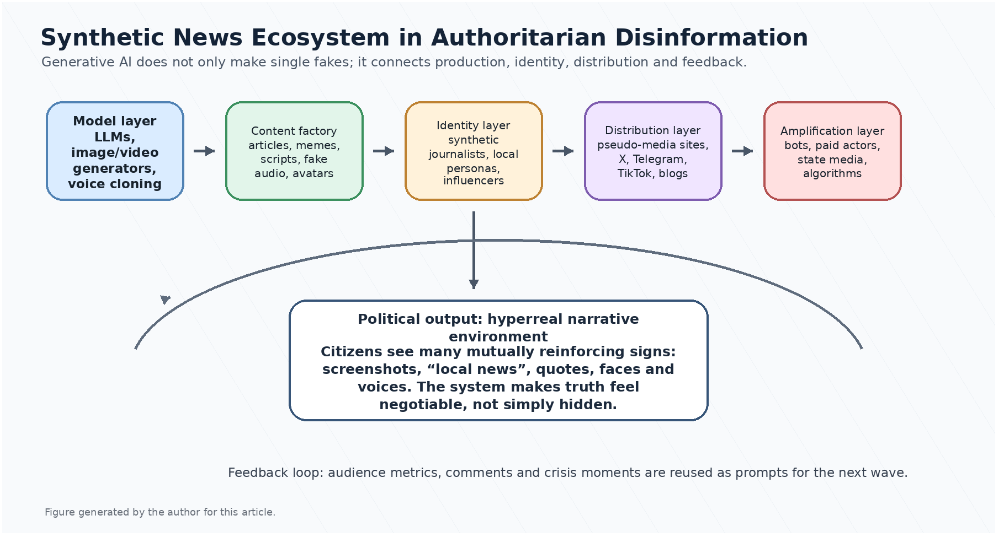
Figure 1. Synthetic news ecosystem in authoritarian disinformation
The article uses a qualitative comparative method based on open reports from 2023-2026 by research organizations, technology companies, public agencies and media monitoring groups. Russia, China and Iran were selected because public reporting repeatedly describes their state-linked or regime-aligned ecosystems using AI-enabled methods [5-10]. The aim is not to prove every attribution independently, but to identify patterns across cases.
The method has limitations. Public reports can miss covert activity, and companies see mainly abuse on their own platforms. Also, AI use does not automatically mean success. For this reason, the analysis separates capability from impact: it studies what AI makes easier, but also asks whether campaigns reached audiences.
The cases suggest that generative AI is most useful at four points: production, localization, identity construction and narrative laundering. It can adapt propaganda to different languages, create fake people or media brands, and make old narratives look like independent reporting. Table 1 summarizes these affordances.
The article uses a qualitative comparative method based on open reports from 2023-2026 by research organizations, technology companies, public agencies and media monitoring groups. Russia, China and Iran were selected because public reporting repeatedly describes their state-linked or regime-aligned ecosystems using AI-enabled methods [5-10]. The aim is not to prove every attribution independently, but to identify patterns across cases.
The method has limitations. Public reports can miss covert activity, and companies see mainly abuse on their own platforms. Also, AI use does not automatically mean success. For this reason, the analysis separates capability from impact: it studies what AI makes easier, but also asks whether campaigns reached audiences.
The cases suggest that generative AI is most useful at four points: production, localization, identity construction and narrative laundering. It can adapt propaganda to different languages, create fake people or media brands, and make old narratives look like independent reporting. Table 1 summarizes these affordances.
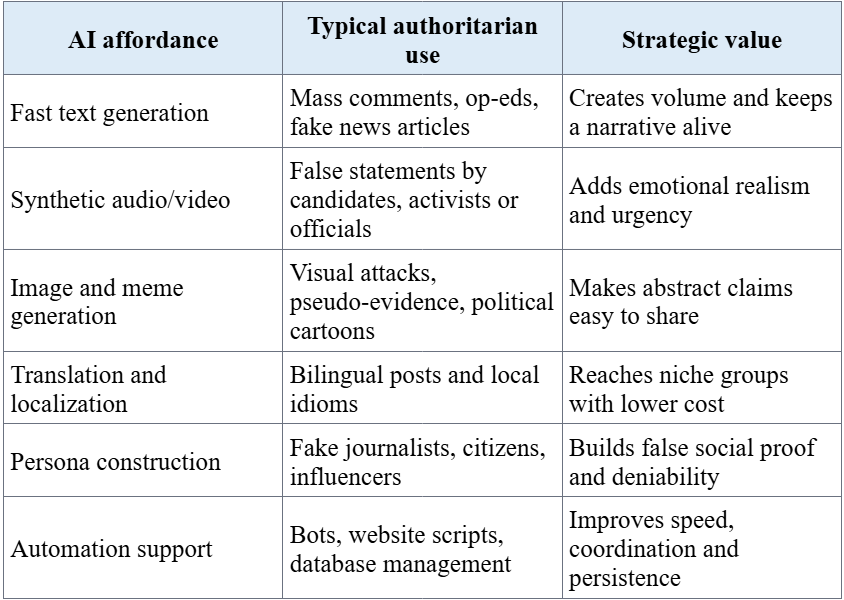
Table 1. Main affordances of generative AI for influence operations
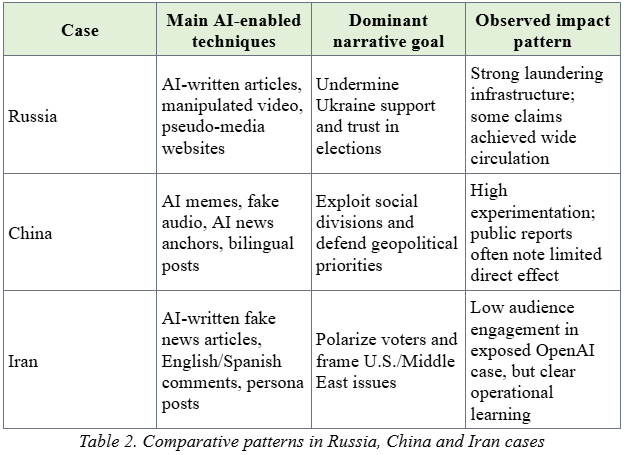
Russia is the clearest example of narrative laundering. Microsoft reported that Russian operations in 2024 focused on undermining support for Ukraine and that Storm-1516 seeded claims through supposed whistleblowers, repeated them on websites, and then amplified them through officials or aligned influencers [6]. The U.S. Treasury later stated that a GRU-affiliated organization used generative AI to create disinformation and support at least one hundred websites imitating news outlets [9]. In 2025, NewsGuard reported AI-fabricated scandals targeting France [10].
This Russian pattern shows that AI does not only invent content. It creates the appearance of corroboration. A false claim becomes more persuasive when a reader sees it on a video channel, a website and then in a repost by a familiar account. The source chain is artificial, but the user experiences it as confirmation.
China-linked operations show another direction: synthetic visuals, fake accounts and localization. Microsoft reported that Storm-1376, also known as Spamouflage or Dragonbridge, used suspected AI-generated audio during Taiwan's 2024 presidential election and also deployed memes and AI news anchors [7]. Graphika's 2026 analysis found Spamouflage-linked accounts producing AI-generated English and Tibetan content around the Central Tibetan Administration election, showing how AI helps actors work in niche political contexts [12].
The Chinese case is important because it shows experimentation. The reported campaigns were not always highly effective, but they tested voter divisions, visual formats and multilingual messaging. Authoritarian actors can learn from failure because the cost of trying is low.
Iran-linked operations often combine cyber activity, fake news sites and divisive political framing. OpenAI reported in August 2024 that it banned accounts connected to Storm-2035, an Iranian operation using ChatGPT to generate articles and short English/Spanish comments about the U.S. campaign, Gaza, Israel at the Olympic Games and other issues [8]. OpenAI noted that it did not reach a meaningful audience, but the case shows how AI can support a fake media ecosystem.
The Iranian case also shows the hybrid nature of modern influence. Cyber operations may steal or leak information, while AI-written content gives the leak a political frame. Fake news websites can target ideological communities separately. Often, the goal is not persuasion in favor of Iran, but sharper distrust inside the target society.
This Russian pattern shows that AI does not only invent content. It creates the appearance of corroboration. A false claim becomes more persuasive when a reader sees it on a video channel, a website and then in a repost by a familiar account. The source chain is artificial, but the user experiences it as confirmation.
China-linked operations show another direction: synthetic visuals, fake accounts and localization. Microsoft reported that Storm-1376, also known as Spamouflage or Dragonbridge, used suspected AI-generated audio during Taiwan's 2024 presidential election and also deployed memes and AI news anchors [7]. Graphika's 2026 analysis found Spamouflage-linked accounts producing AI-generated English and Tibetan content around the Central Tibetan Administration election, showing how AI helps actors work in niche political contexts [12].
The Chinese case is important because it shows experimentation. The reported campaigns were not always highly effective, but they tested voter divisions, visual formats and multilingual messaging. Authoritarian actors can learn from failure because the cost of trying is low.
Iran-linked operations often combine cyber activity, fake news sites and divisive political framing. OpenAI reported in August 2024 that it banned accounts connected to Storm-2035, an Iranian operation using ChatGPT to generate articles and short English/Spanish comments about the U.S. campaign, Gaza, Israel at the Olympic Games and other issues [8]. OpenAI noted that it did not reach a meaningful audience, but the case shows how AI can support a fake media ecosystem.
The Iranian case also shows the hybrid nature of modern influence. Cyber operations may steal or leak information, while AI-written content gives the leak a political frame. Fake news websites can target ideological communities separately. Often, the goal is not persuasion in favor of Iran, but sharper distrust inside the target society.
The most serious consequence is not that every citizen believes every synthetic object. The deeper problem is weakening shared standards of evidence. When voters repeatedly encounter fabricated screenshots, deepfake audio, invented experts and fake local outlets, they may become less sure that any public claim can be checked. This is the liar's dividend: real evidence can be dismissed as fake because fake evidence is common [3].
For democratic institutions, the risk is high during elections and crises. A fake audio clip released shortly before voting may not need long life; a few hours of confusion can be enough. Debunking moves slower than emotional content. Figure 2 shows that the political effect can survive after debunking, because doubt itself becomes the product.
For democratic institutions, the risk is high during elections and crises. A fake audio clip released shortly before voting may not need long life; a few hours of confusion can be enough. Debunking moves slower than emotional content. Figure 2 shows that the political effect can survive after debunking, because doubt itself becomes the product.
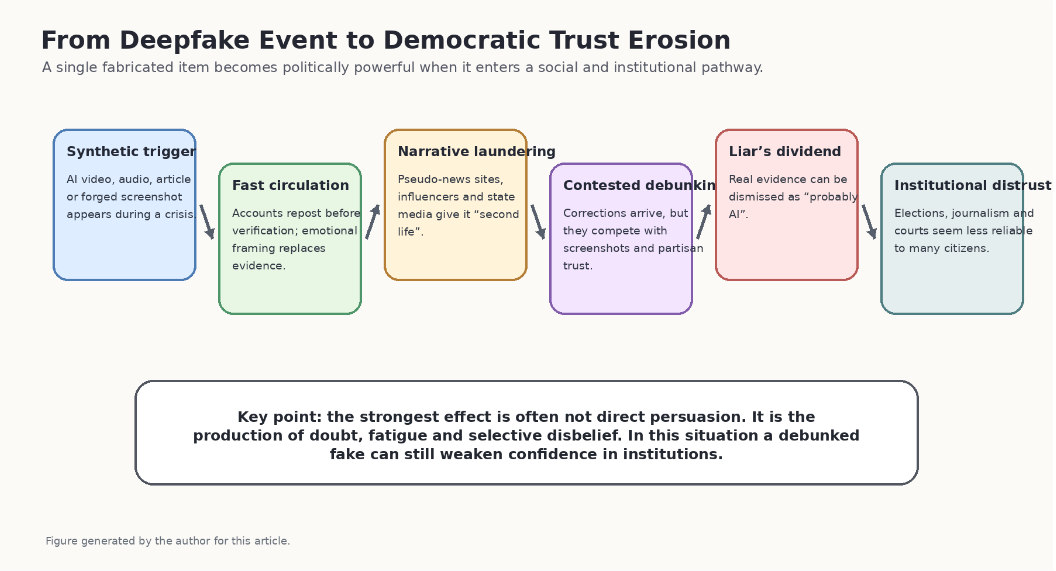
Figure 2. Pathway from synthetic content to institutional distrust
A balanced view is necessary. OpenAI and Microsoft often found limited engagement for some AI-assisted operations [5; 8]. Generative AI is not a magic weapon: networks, timing, algorithms, local grievances and trusted amplifiers still matter. AI improves the supply of deception, but demand is created by polarization and low trust.
Generative AI has not invented authoritarian disinformation, but it has changed its scale, texture and symbolic power. It allows regimes and aligned actors to produce simulacra: artificial signs that imitate journalism, public opinion and evidence. Russia, China and Iran use AI differently, from narrative laundering to visual experimentation and fake-news ecosystems. The common feature is making political reality feel crowded with suspicious and emotional signals.
Democratic responses should combine technical and social measures. Content provenance, watermarking, cross-platform threat sharing, fast crisis debunking and researcher access to platform data are needed. However, the response should not become broad censorship, because authoritarian states can use anti-disinformation language to justify repression. A sustainable defense is a transparent information environment where claims can be checked quickly and repeated manipulation has costs.
References:
1. Baudrillard J. Simulacra and Simulation. Ann Arbor: University of Michigan Press, 1994.
2. Wardle C., Derakhshan H. Information Disorder: Toward an Interdisciplinary Framework for Research and Policy Making. Strasbourg: Council of Europe, 2017.
3. Freedom House. Freedom on the Net 2023: The Repressive Power of Artificial Intelligence. Washington, DC, 2023. Available at: https://freedomhouse.org/report/freedom-net/2023/repressive-power-artificial-intelligence (accessed 06.07.2026).
4. World Economic Forum. Global Risks Report 2024: Disinformation Tops Global Risks 2024 as Environmental Threats Intensify. Geneva, 2024. Available at: https://www.weforum.org/press/2024/01/global-risks-report-2024-press-release/ (accessed 06.07.2026).
5. OpenAI. Disrupting Deceptive Uses of AI by Covert Influence Operations. 30 May 2024. Available at: https://openai.com/index/disrupting-deceptive-uses-of-ai-by-covert-influence-operations/ (accessed 06.07.2026).
6. Microsoft Threat Analysis Center. Russian US Election Interference Targets Support for Ukraine after Slow Start. 17 April 2024. Available at: https://blogs.microsoft.com/on-the-issues/2024/04/17/russia-us-election-interference-deepfakes-ai/ (accessed 06.07.2026).
7. Microsoft Threat Analysis Center. China Tests US Voter Fault Lines and Ramps AI Content to Boost Its Geopolitical Interests. 4 April 2024. Available at: https://blogs.microsoft.com/on-the-issues/2024/04/04/china-ai-influence-elections-mtac-cybersecurity/ (accessed 06.07.2026).
8. OpenAI. Disrupting a Covert Iranian Influence Operation. 16 August 2024. Available at: https://openai.com/index/disrupting-a-covert-iranian-influence-operation/ (accessed 06.07.2026).
9. U.S. Department of the Treasury. Treasury Sanctions Entities in Iran and Russia That Attempted to Interfere in the U.S. 2024 Election. 31 December 2024. Available at: https://home.treasury.gov/news/press-releases/jy2766 (accessed 06.07.2026).
10. NewsGuard. Russian Propaganda Campaign Targets France with AI-Fabricated Scandals, Drawing 55 Million Views on Social Media. 17 April 2025. Available at: https://www.newsguardtech.com/special-reports/russian-propaganda-campaign-targets-france-with-ai-fabricated-scandals/ (accessed 06.07.2026).
11. Wallner C., Copeland S., Giustozzi A. Russia, AI and the Future of Disinformation Warfare. Royal United Services Institute, 30 June 2025. Available at:https://www.rusi.org/explore-our-research/publications/emerging-insights/russia-ai-and-future-disinformation-warfare (accessed 06.07.2026).
12. Graphika Research Team. Deepfakes, Noise, and Doubt: AI's Role in Three Recent Elections. Graphika, 4 March 2026. Available at: https://www.graphika.com/blogs/deepfakes-noise-and-doubt-ai-s-role-in-three-recent-elections (accessed 06.07.2026).
Генеративті жасанды интеллект және авторитарлық дезинформацияның жаңа дәуірі: дипфейктерден синтетикалық жаңалықтар экожүйесіне дейін
1Бексултанова Динара Бакытжановна
Халықаралық қатынастар магистрі
²Сейлхан Балауса
Аймақтану PhD докторы
Л.Н.Гумилев атындағы Еуразия ұлттық университеті
(Астана, Қазақстан)
Аңдатпа. Бұл мақала генеративті жасанды интеллектінің авторитарлық дезинформацияны қалай өзгертіп жатқанын қарастырады. Зерттеу тек кеңінен назар аударатын дипфейктерге ғана емес, сонымен қатар жасанды интеллект арқылы жазылған мақалалар, жалған аудиоматериалдар, ойдан шығарылған әлеуметтік желі тұлғалары және псевдожурналистік веб-сайттар бірін-бірі қолдап, өзара байланысты әрекет ететін кең ауқымды синтетикалық жаңалықтар экожүйелеріне де назар аударады.
Сапалық салыстырмалы тәсілді қолдана отырып, мақалада 2023-2026 жылдар аралығында Ресей, Қытай және Иранмен байланысты ашық дереккөздерде жарияланған жағдайлар талданады. Зерттеудің теориялық негізі ретінде Жан Бодрийярдың симулякрлар тұжырымдамасы қолданылады, өйткені жасанды интеллект негізіндегі насихат көбінесе тұрақты түпнұсқасы болмаса да, шынайы болып көрінетін белгілер мен бейнелерді қалыптастырады.
Мақалада негізгі саяси қауіп азаматтардың әрбір жалған ақпаратқа сенуінде ғана емес екені тұжырымдалады. Одан да елеулі мәселе – сайлауға, журналистикаға және қоғамдық маңызы бар дәлелдер мен ақпараттың шынайылығына деген сенімнің біртіндеп әлсіреуі.
Сонымен қатар, зерттеуде әшкереленген көптеген жасанды интеллект негізіндегі ақпараттық операциялардың аудиторияны тікелей қамту деңгейі шектеулі болғаны атап өтіледі. Бұл аталған мәселенің қоғамдық кеңістікте қалыптасқан үрейлі түсініктерге қарағанда әлдеқайда күрделі әрі көпқырлы екенін көрсетеді.
Түйін сөздер: генеративті жасанды интеллект; авторитаризм; дезинформация; дипфейктер; синтетикалық медиа; сайлау; симулякрлар.
Генеративный искусственный интеллект и новая эра авторитарной дезинформации: от дипфейков к синтетическим новостным экосистемам
1Бексултанова Динара Бакытжановна
Магистр международных отношений
²Сейлхан Балауса
PhD доктор регионоведения
Евразийский национальный университет имени Л.Н. Гумилева
(Астана, Казахстан)
Аннотация. В статье рассматривается, каким образом генеративный искусственный интеллект меняет характер авторитарной дезинформации. Основное внимание уделяется не только резонансным дипфейкам, но и более широким синтетическим новостным экосистемам, в которых созданные с помощью искусственного интеллекта статьи, поддельные аудиоматериалы, вымышленные персонажи в социальных сетях и псевдожурналистские веб-сайты взаимно дополняют и поддерживают друг друга.
На основе качественного сравнительного подхода в статье анализируются известные случаи, связанные с Россией, Китаем и Ираном в период 2023–2026 годов. Теоретической основой исследования выступает концепция симулякров Жана Бодрийяра, поскольку пропаганда с использованием искусственного интеллекта зачастую создает образы и знаки, которые выглядят реалистично, не имея при этом устойчивого оригинала.
В статье утверждается, что основная политическая опасность заключается не только в том, что граждане могут поверить каждому фейку. Более серьезной угрозой является постепенная утрата доверия к выборам, журналистике и публично представленным доказательствам.
В то же время отмечается, что многие выявленные информационные операции с использованием искусственного интеллекта имели ограниченный прямой охват аудитории. Это свидетельствует о том, что проблема является более сложной и многогранной, чем это представляется в рамках распространенных панических представлений о влиянии искусственного интеллекта.
Ключевые слова: генеративный искусственный интеллект; авторитаризм; дезинформация; дипфейки; синтетические медиа; выборы; симулякры
Generative AI has not invented authoritarian disinformation, but it has changed its scale, texture and symbolic power. It allows regimes and aligned actors to produce simulacra: artificial signs that imitate journalism, public opinion and evidence. Russia, China and Iran use AI differently, from narrative laundering to visual experimentation and fake-news ecosystems. The common feature is making political reality feel crowded with suspicious and emotional signals.
Democratic responses should combine technical and social measures. Content provenance, watermarking, cross-platform threat sharing, fast crisis debunking and researcher access to platform data are needed. However, the response should not become broad censorship, because authoritarian states can use anti-disinformation language to justify repression. A sustainable defense is a transparent information environment where claims can be checked quickly and repeated manipulation has costs.
References:
1. Baudrillard J. Simulacra and Simulation. Ann Arbor: University of Michigan Press, 1994.
2. Wardle C., Derakhshan H. Information Disorder: Toward an Interdisciplinary Framework for Research and Policy Making. Strasbourg: Council of Europe, 2017.
3. Freedom House. Freedom on the Net 2023: The Repressive Power of Artificial Intelligence. Washington, DC, 2023. Available at: https://freedomhouse.org/report/freedom-net/2023/repressive-power-artificial-intelligence (accessed 06.07.2026).
4. World Economic Forum. Global Risks Report 2024: Disinformation Tops Global Risks 2024 as Environmental Threats Intensify. Geneva, 2024. Available at: https://www.weforum.org/press/2024/01/global-risks-report-2024-press-release/ (accessed 06.07.2026).
5. OpenAI. Disrupting Deceptive Uses of AI by Covert Influence Operations. 30 May 2024. Available at: https://openai.com/index/disrupting-deceptive-uses-of-ai-by-covert-influence-operations/ (accessed 06.07.2026).
6. Microsoft Threat Analysis Center. Russian US Election Interference Targets Support for Ukraine after Slow Start. 17 April 2024. Available at: https://blogs.microsoft.com/on-the-issues/2024/04/17/russia-us-election-interference-deepfakes-ai/ (accessed 06.07.2026).
7. Microsoft Threat Analysis Center. China Tests US Voter Fault Lines and Ramps AI Content to Boost Its Geopolitical Interests. 4 April 2024. Available at: https://blogs.microsoft.com/on-the-issues/2024/04/04/china-ai-influence-elections-mtac-cybersecurity/ (accessed 06.07.2026).
8. OpenAI. Disrupting a Covert Iranian Influence Operation. 16 August 2024. Available at: https://openai.com/index/disrupting-a-covert-iranian-influence-operation/ (accessed 06.07.2026).
9. U.S. Department of the Treasury. Treasury Sanctions Entities in Iran and Russia That Attempted to Interfere in the U.S. 2024 Election. 31 December 2024. Available at: https://home.treasury.gov/news/press-releases/jy2766 (accessed 06.07.2026).
10. NewsGuard. Russian Propaganda Campaign Targets France with AI-Fabricated Scandals, Drawing 55 Million Views on Social Media. 17 April 2025. Available at: https://www.newsguardtech.com/special-reports/russian-propaganda-campaign-targets-france-with-ai-fabricated-scandals/ (accessed 06.07.2026).
11. Wallner C., Copeland S., Giustozzi A. Russia, AI and the Future of Disinformation Warfare. Royal United Services Institute, 30 June 2025. Available at:https://www.rusi.org/explore-our-research/publications/emerging-insights/russia-ai-and-future-disinformation-warfare (accessed 06.07.2026).
12. Graphika Research Team. Deepfakes, Noise, and Doubt: AI's Role in Three Recent Elections. Graphika, 4 March 2026. Available at: https://www.graphika.com/blogs/deepfakes-noise-and-doubt-ai-s-role-in-three-recent-elections (accessed 06.07.2026).
Генеративті жасанды интеллект және авторитарлық дезинформацияның жаңа дәуірі: дипфейктерден синтетикалық жаңалықтар экожүйесіне дейін
1Бексултанова Динара Бакытжановна
Халықаралық қатынастар магистрі
²Сейлхан Балауса
Аймақтану PhD докторы
Л.Н.Гумилев атындағы Еуразия ұлттық университеті
(Астана, Қазақстан)
Аңдатпа. Бұл мақала генеративті жасанды интеллектінің авторитарлық дезинформацияны қалай өзгертіп жатқанын қарастырады. Зерттеу тек кеңінен назар аударатын дипфейктерге ғана емес, сонымен қатар жасанды интеллект арқылы жазылған мақалалар, жалған аудиоматериалдар, ойдан шығарылған әлеуметтік желі тұлғалары және псевдожурналистік веб-сайттар бірін-бірі қолдап, өзара байланысты әрекет ететін кең ауқымды синтетикалық жаңалықтар экожүйелеріне де назар аударады.
Сапалық салыстырмалы тәсілді қолдана отырып, мақалада 2023-2026 жылдар аралығында Ресей, Қытай және Иранмен байланысты ашық дереккөздерде жарияланған жағдайлар талданады. Зерттеудің теориялық негізі ретінде Жан Бодрийярдың симулякрлар тұжырымдамасы қолданылады, өйткені жасанды интеллект негізіндегі насихат көбінесе тұрақты түпнұсқасы болмаса да, шынайы болып көрінетін белгілер мен бейнелерді қалыптастырады.
Мақалада негізгі саяси қауіп азаматтардың әрбір жалған ақпаратқа сенуінде ғана емес екені тұжырымдалады. Одан да елеулі мәселе – сайлауға, журналистикаға және қоғамдық маңызы бар дәлелдер мен ақпараттың шынайылығына деген сенімнің біртіндеп әлсіреуі.
Сонымен қатар, зерттеуде әшкереленген көптеген жасанды интеллект негізіндегі ақпараттық операциялардың аудиторияны тікелей қамту деңгейі шектеулі болғаны атап өтіледі. Бұл аталған мәселенің қоғамдық кеңістікте қалыптасқан үрейлі түсініктерге қарағанда әлдеқайда күрделі әрі көпқырлы екенін көрсетеді.
Түйін сөздер: генеративті жасанды интеллект; авторитаризм; дезинформация; дипфейктер; синтетикалық медиа; сайлау; симулякрлар.
Генеративный искусственный интеллект и новая эра авторитарной дезинформации: от дипфейков к синтетическим новостным экосистемам
1Бексултанова Динара Бакытжановна
Магистр международных отношений
²Сейлхан Балауса
PhD доктор регионоведения
Евразийский национальный университет имени Л.Н. Гумилева
(Астана, Казахстан)
Аннотация. В статье рассматривается, каким образом генеративный искусственный интеллект меняет характер авторитарной дезинформации. Основное внимание уделяется не только резонансным дипфейкам, но и более широким синтетическим новостным экосистемам, в которых созданные с помощью искусственного интеллекта статьи, поддельные аудиоматериалы, вымышленные персонажи в социальных сетях и псевдожурналистские веб-сайты взаимно дополняют и поддерживают друг друга.
На основе качественного сравнительного подхода в статье анализируются известные случаи, связанные с Россией, Китаем и Ираном в период 2023–2026 годов. Теоретической основой исследования выступает концепция симулякров Жана Бодрийяра, поскольку пропаганда с использованием искусственного интеллекта зачастую создает образы и знаки, которые выглядят реалистично, не имея при этом устойчивого оригинала.
В статье утверждается, что основная политическая опасность заключается не только в том, что граждане могут поверить каждому фейку. Более серьезной угрозой является постепенная утрата доверия к выборам, журналистике и публично представленным доказательствам.
В то же время отмечается, что многие выявленные информационные операции с использованием искусственного интеллекта имели ограниченный прямой охват аудитории. Это свидетельствует о том, что проблема является более сложной и многогранной, чем это представляется в рамках распространенных панических представлений о влиянии искусственного интеллекта.
Ключевые слова: генеративный искусственный интеллект; авторитаризм; дезинформация; дипфейки; синтетические медиа; выборы; симулякры